


Key Takeaways
- Dementia shifts the dynamic of a marriage in deep, emotional ways.
- Feelings like loneliness, guilt, and burnout are more common than most spouses admit.
- Your well-being matters just as much as your partner’s care.
- Daily routines and small moments of connection can make a real difference.
- Memory care communities offer personalized support, warmth, and dignity for your partner.
When Love Looks Different Than You Expected
When dementia enters the picture, the life you built with another person can begin to shift—quietly at first, then all at once. You might find yourself making decisions alone, answering the same questions on repeat, or grieving someone who’s still right beside you.
The impact of dementia on spouses is real, layered, and something no one should navigate without support. Whether you’re in the early stages of this journey or deep in the thick of it, there are ways to cope, connect, and still find meaning in this chapter together. Juniper Village at Louisville is here to help you and your partner find that path forward and offer support through memory care.
How Dementia Changes a Relationship
Marriage is built on partnership—shared decisions, inside jokes, the easy rhythm of two people who know each other well. Dementia can quietly rewire all of that. The role of equal partner begins to blur, and you may find yourself stepping into the role of caregiver without ever choosing to.
Emotional connection doesn’t disappear, but it does change shape. Some days feel warm and familiar. Others feel like reaching through glass. That grief—loving someone while also mourning who they were—is one of the most disorienting parts of this experience. And it’s completely valid. Learning more about what memory care involves can help you feel more prepared for what lies ahead.
The Emotional Toll on Spouses
Feelings That Are More Common Than You Think
Loneliness is one of the most reported feelings among spousal caregivers—even when your partner is right there in the room. There’s a specific kind of ache that comes from missing the version of your person who used to meet you in conversation, in laughter, in memory. Social isolation and loneliness carry real health consequences, which is why reaching out for connection matters more than ever.
Guilt tends to follow frustration around like a shadow. You might snap after a long day and spend the next hour feeling terrible about it. That cycle is exhausting. Frustration doesn’t make you a bad partner—it makes you human. Burnout is real, and round-the-clock personal care can quietly drain even the most devoted spouse.
Why Your Well-Being Matters Too
Here’s something worth sitting with: how you feel directly affects how your partner is cared for. When you’re running on empty, the small, tender moments—a gentle hand, a patient explanation, a familiar song—become harder to offer. Rest isn’t a luxury. It’s part of the care plan. Recognizing the signs of caregiver stress early can help you get ahead of burnout before it takes over.
Joy isn’t selfish either. Taking a walk, calling a friend, or simply sitting with a warm cup of coffee in a quiet room—these aren’t indulgences. They’re the habits that keep you going. Small daily rituals can restore something in you that caregiving slowly chips away.
Practical Tips for Day-to-Day Coping
Routines That Bring Comfort to Both of You
Familiar rhythms are a gift to someone living with memory challenges. A consistent morning routine, the same seat at the table, an afternoon walk at the same time each day—these patterns reduce anxiety and confusion in ways that feel gentle rather than clinical. Explore memory-friendly activities that can spark connection and support well-being at the same time.
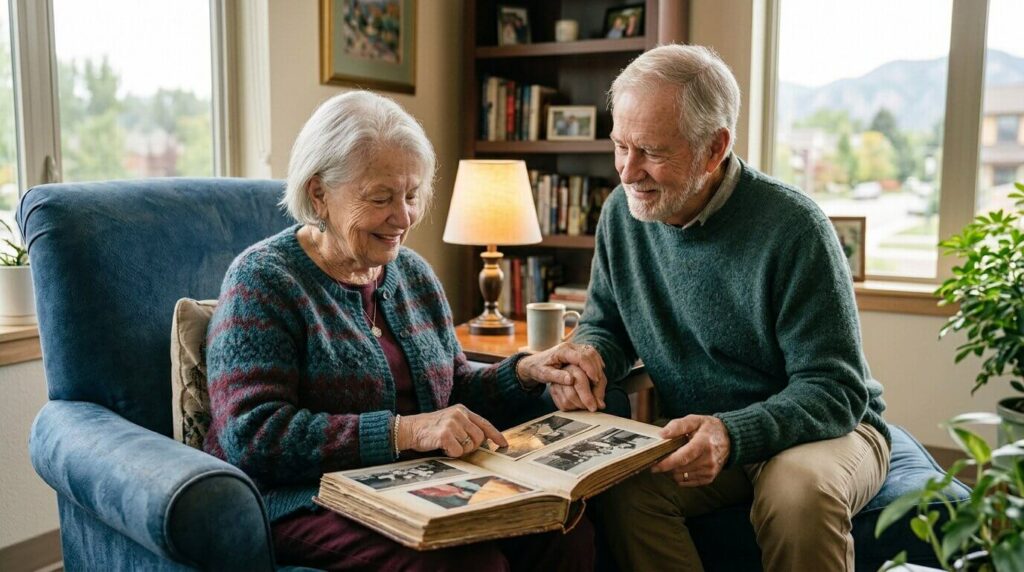
Simple activities can also spark moments of genuine connection. Flipping through old photos together, listening to music from your early years, or tending a small garden patch—these are the moments where your relationship still lives, bright and real.
When to Ask for Help
Asking for help isn’t giving up—it’s giving more. Support groups connect you with others who understand this specific kind of love and this specific kind of hard. That shared experience can feel like a long exhale after holding your breath for months.
Memory care, skilled nursing support, and respite care options can also ease the load in meaningful ways. Respite care, in particular, gives you time to recharge—so you can come back to your partner refreshed, present, and whole.
Exploring Memory Care as a Path Forward
Memory care communities aren’t about stepping back from your partner—they’re about stepping toward a better quality of life for both of you. Personalized care means your partner is seen as an individual, not a diagnosis. Their history, preferences, and personality shape every part of how they’re supported. Take a closer look at the emotional and social advantages of memory care communities to understand what that kind of support can look like day to day.
Structured social programs keep joy and connection alive in ways that can be hard to sustain at home alone. And senior living communities designed for memory care offer something priceless: safety, warmth, and dignity—woven into every part of the day.
Moving Forward Together
Your relationship still holds meaning. It may look different now—quieter in some ways, more tender in others—but love doesn’t require a perfect memory to exist. The right support helps both of you live more fully, not just manage day to day.
Each of our memory care communities is accredited by the Alzheimer’s Foundation of America’s Excellence in Care program, an important distinction that reflects our commitment to safe, compassionate, and person-centered dementia care.
At Juniper Village at Louisville, this chapter doesn’t have to feel like an ending. With personalized memory care rooted in joy and connection, your partner can feel secure and seen—and you can breathe again. Reach out to us to learn how you can walk this road with your family.