


Key Takeaways
- Memory care offers personalized, around-the-clock support tailored to each person’s unique journey.
- Residents can enjoy structured days filled with meaningful activities, connection, and comfort.
- Families can step back from exhausting caregiver roles and simply be present.
- Open communication helps families stay involved and informed about their loved one’s care.
- A supportive memory care community can offer a warm, lively environment that feels like home.
Memory Care Is for the Whole Family
When someone you love starts to need more support than you can give at home, it can feel like you’re standing at a crossroads. You want them safe, happy, and surrounded by people who truly see them. Additional support can help ease your stress while giving your loved one the care they need.
Memory care communities are designed to support your loved one and the entire family around them. A supportive memory care community can give families more time to focus on connection rather than caregiving tasks.
What to Expect from Memory Care
Forget the image of long, sterile hallways and cookie-cutter schedules. Memory care can offer welcoming spaces, familiar music, and meaningful daily interactions with staff who take the time to understand each resident’s needs, preferences, and story. It’s built around empowering people by tailoring care to their needs and preferences.
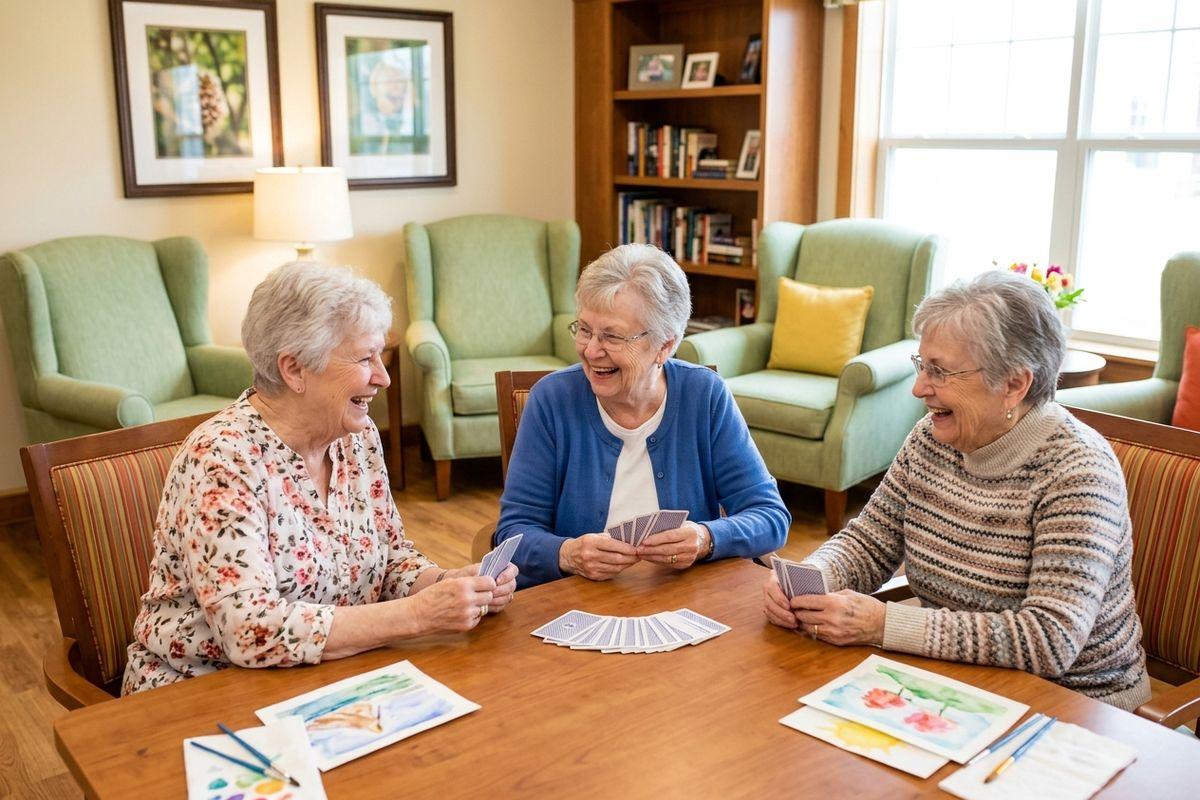
Each person receives a personalized care path built around who they are, not just what they need. Trained, compassionate staff are present around the clock, offering support that feels natural and dignified. And because the spaces are thoughtfully designed for both freedom and safety, your loved one can move through their day with a sense of ease.
A group of older adults laughing and playing cards around a table. Each person receives a personalized care path built around who they are, not just what they need. Trained, compassionate staff are present around the clock, offering support that feels natural and dignified. And because the spaces are thoughtfully designed for both freedom and safety, your loved one can move through their day with a sense of ease.
How Residents Thrive in Memory Care
A Day Full of Connection & Joy
A typical day in memory care isn’t about sitting quietly and waiting. It’s about painting with watercolors, swaying to a favorite song from decades past, or sharing a laugh over a card game with a new friend. Activities are chosen to spark delight and stir happy memories, meeting each person where they are.
Social programs are woven throughout the day so residents have opportunities to build social connections and develop a sense of belonging. Staying socially connected can support well-being throughout the day, and that sense of community, of being known and included, is something memory care communities prioritize every day.
Structure That Feels Like Home
Familiar routines can provide a sense of comfort and predictability. When someone living with a memory condition knows what to expect, they may feel more at ease. Consistent rhythms throughout the day create a steady, reassuring backdrop for everything else.
The spaces themselves do a lot of the work, too. Warm lamplight, soft textures underfoot, and gentle ambient sounds create an environment that feels welcoming rather than clinical. It’s the kind of place where your loved one can settle in and actually feel at home. Thoughtfully designed enrichment and engagement programs add another layer of comfort and purpose to each day.
How Memory Care Can Support Families
From Caregiver to Loved One Again
If you’ve been the primary caregiver for someone with memory challenges, you already know how all-consuming it can be. The sleepless nights, the constant vigilance, the emotional weight of it all. When professional care takes over, something shifts. You get to just be a son, daughter, spouse, or sibling again.
Visits become about connection rather than caregiving tasks. You can share a meal, take a slow walk through the garden, or simply sit together without the mental checklist running in the background. That kind of quality time is something many families say they haven’t experienced in years. If caregiver stress has been building for a while, this shift can feel like a breath of fresh air.
Staying in the Loop
Moving a loved one into memory care doesn’t mean stepping back from their life. A supportive community actively welcomes family involvement and keeps communication open and ongoing. You’ll know how your loved one is doing, what they’ve been up to, and how their care plan is evolving.
That transparency builds real trust. And when families feel informed and included, residents and their families can feel more supported. The emotional and social benefits of memory care can extend beyond the individual, supporting the whole family circle.
Signs It Might Be Time to Explore Memory Care
Sometimes the signs are subtle, and sometimes they’re hard to ignore. If any of the following feel familiar, it may be worth taking a closer look at memory care options:
- Safety concerns at home are becoming harder to manage on your own.
- Your loved one seems isolated, anxious, or more withdrawn than usual.
- Caregiver burnout is affecting your health, your relationships, and your daily life.
Recognizing these moments isn’t giving up. It’s opening a door to something more supportive for everyone.
How to Choose the Right Memory Care Community
Questions Worth Asking on a Visit
When you tour a community, come with questions. Ask how care plans are personalized for each resident and what a typical day of activities looks like. The answers will tell you a lot about whether this place truly sees people as individuals.
What a Great Fit Feels Like
Trust your gut when you walk through the door. Staff who greet you warmly, know residents by name, and move through the space with ease can be a good sign. Bright, lively rooms where people are engaged can also give you a sense of the community’s atmosphere.
Choosing Memory Care for Your Loved One
When choosing a memory care community, understanding how it supports your loved one can help you make an informed decision. Knowing what to expect and recognizing signs that your loved one may benefit from memory care can help you feel more prepared for the next step.
At Juniper Village at Louisville, our vibrant, secure memory care community is designed to support your loved one through meaningful activities and supportive routines, with research-backed care that adapts to their needs.
Get in touch with us today to find the right support for your loved one.